
Comparing Swift and Objective-C
Apple's new Swift programming language is designed to be interoperable with Objective-C, but what can it do that Objective-C can't? Find out in this course, as Simon Allardice explores the capabilities of each language, showing how and when they intersect–and also the places where the languages don't translate well. Discover how to migrate existing Objective-C projects to Swift and work with both languages in the same project. Then learn best practices for using Objective-C libraries and frameworks in new Swift code.
Topics include:
- Exploring the interoperability of Swift and Objective-C
- Comparing language syntax
- Understanding how each language uses objects and methods
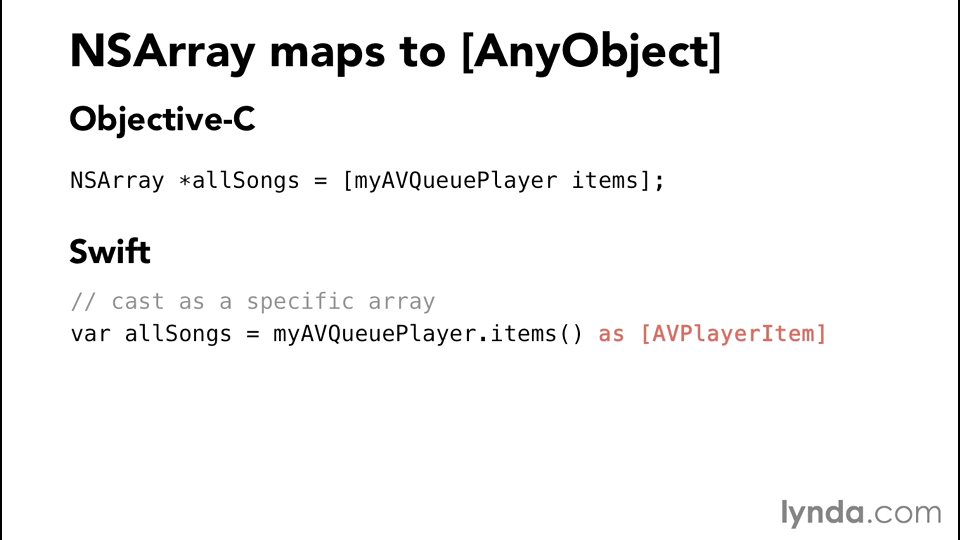
- Bridging arrays, dictionaries, and numbers
- Dealing with nil return types from Objective-C methods
- Working with NSError in Swift
- Working with Swift and Objective-C strings
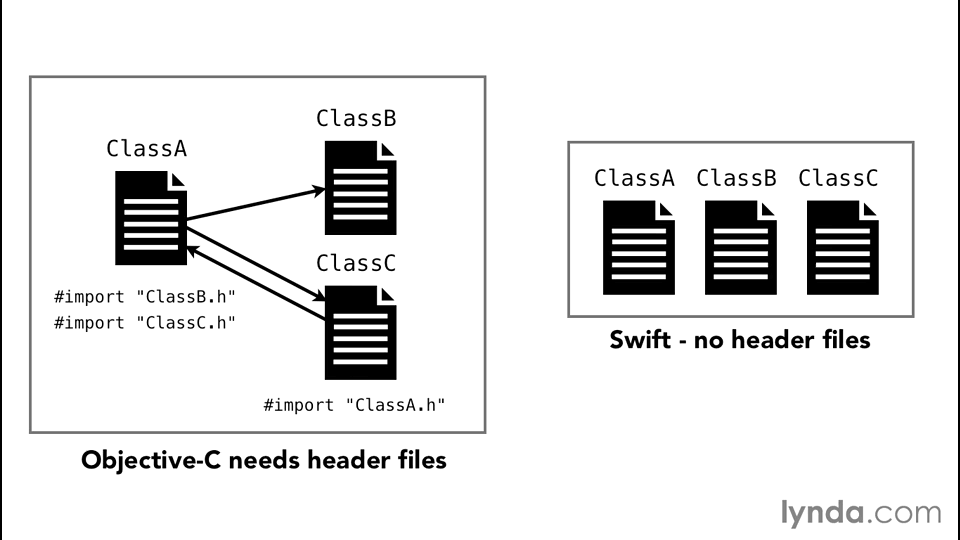
- Adding Swift to an existing Objective-C project
- Inheriting between languages
Screenshots

Frequently asked questions
How do I install the app?
Mount the image, drag the app into the "Applications" folder and launch it. If the system blocks the launch, allow it in "System Settings → Privacy & Security".
The app is damaged or won't launch
Reinstalling from a fresh image usually helps. Make sure your macOS version matches the one listed in the compatibility specs.
How do I update?
Download the new version from the site and install it over the current one — your settings will be preserved.
The download link doesn't work
Try a mirror or a download manager. For large files the browser often drops the connection.
How do I completely remove the app?
Use an uninstaller utility — it cleans up the service files that remain after moving the app to the trash.
Information
Users of Guests are not allowed to comment this publication.
Choose a download source
Comparing Swift and Objective-C · 117.37 MB